15 drownings in weeks: SA urged to swim safe this summer
Lifeguard gaps and silent dangers put swimmers at risk nationwide
Fifteen drowning and missing swimmer incidents in a matter of weeks. That is the tally that prompted Lifesaving South Africa to raise the alarm last month, as rising temperatures signalled the start of a summer season in which families across the country will flock to beaches, pools, dams and rivers.
The stakes for ordinary South Africans could hardly be clearer. Among the reported incidents were swimmers who disappeared at Mtunzini Main Beach in KwaZulu-Natal and at the Kromme River mouth in the Eastern Cape. The pattern, stretching from coastal tragedies to emergencies at inland dams and residential swimming pools, has reinforced calls for better supervision, improved water safety awareness and greater public access to rescue equipment.
November has brought no relief. A 32-year-old woman drowned at Umzumbe Beach on the KwaZulu-Natal South Coast after getting into difficulty while swimming with two children. Bystanders pulled her from the water, but resuscitation efforts failed. At Salmon Bay in Ballito, a man in his 30s drowned at a beach without active lifeguard coverage. Rescue teams also kept searching for a 39-year-old man who went missing after a boat capsized at Hartbeespoort Dam, where thick water hyacinth complicated the operation.
The year began no more gently. On New Year’s Day, several people were caught in a mass drowning incident at Pennington Beach in KwaZulu-Natal. Two people, aged 21 and 18, were confirmed dead, and three other men remained missing. In Ballito, Mohammed Zaheer Sindhi, 39, disappeared after entering the water to help his nephew, who had been caught in a rip current.
For the public, the lesson emerging from these incidents is that danger is not confined to unfamiliar coastlines. Emergency medical services provider ER24 recorded 213 drowning and diving-related incidents through its Emergency Contact Centre between August 2024 and August 2026. Gauteng accounted for 73 of them and the Western Cape 70, a clear sign that water-related emergencies are not limited to coastal provinces. The figures also show a seasonal rise: incidents climbed from 27 in October to 43 in December before easing to 35 in January, with most other months recording between 11 and 16.
Silence, not splashing, is often the warning sign. Faheem Essop, ER24 branch manager for Johannesburg South, warned that drowning can happen within seconds and may not attract the attention of people nearby. “One of the biggest misconceptions is that drowning is always loud and obvious. This is not always the case. A person who is drowning may be unable to shout, wave for help or attract attention,” he said. Swimming pools, he noted, remain a particular concern because they are common in residential settings and can create a false sense of security. Young children are especially vulnerable when adult supervision lapses, even briefly. “A common factor we see is a brief lapse in supervision. Parents or caregivers may only be distracted for a few moments, but unfortunately those few seconds can be enough for a child to end up in danger,” Essop said. He advised households to designate one responsible adult to watch children around water rather than assuming someone else is doing so. Alcohol adds another layer of risk, since drinking can impair judgement, coordination and the ability to assess danger accurately.
On the coast, the risks shift but do not fade. Randall de Koker, ER24 branch operations manager for the Southern Cape, said beaches account for many of the drowning emergencies in his region, particularly during holidays. “People often underestimate the strength and power of water currents and overestimate their own physical condition. We also find that many incidents involve visitors who may be unfamiliar with local water conditions and hazards,” he said, urging beachgoers to observe warning signs and swim only where lifeguards are on duty.
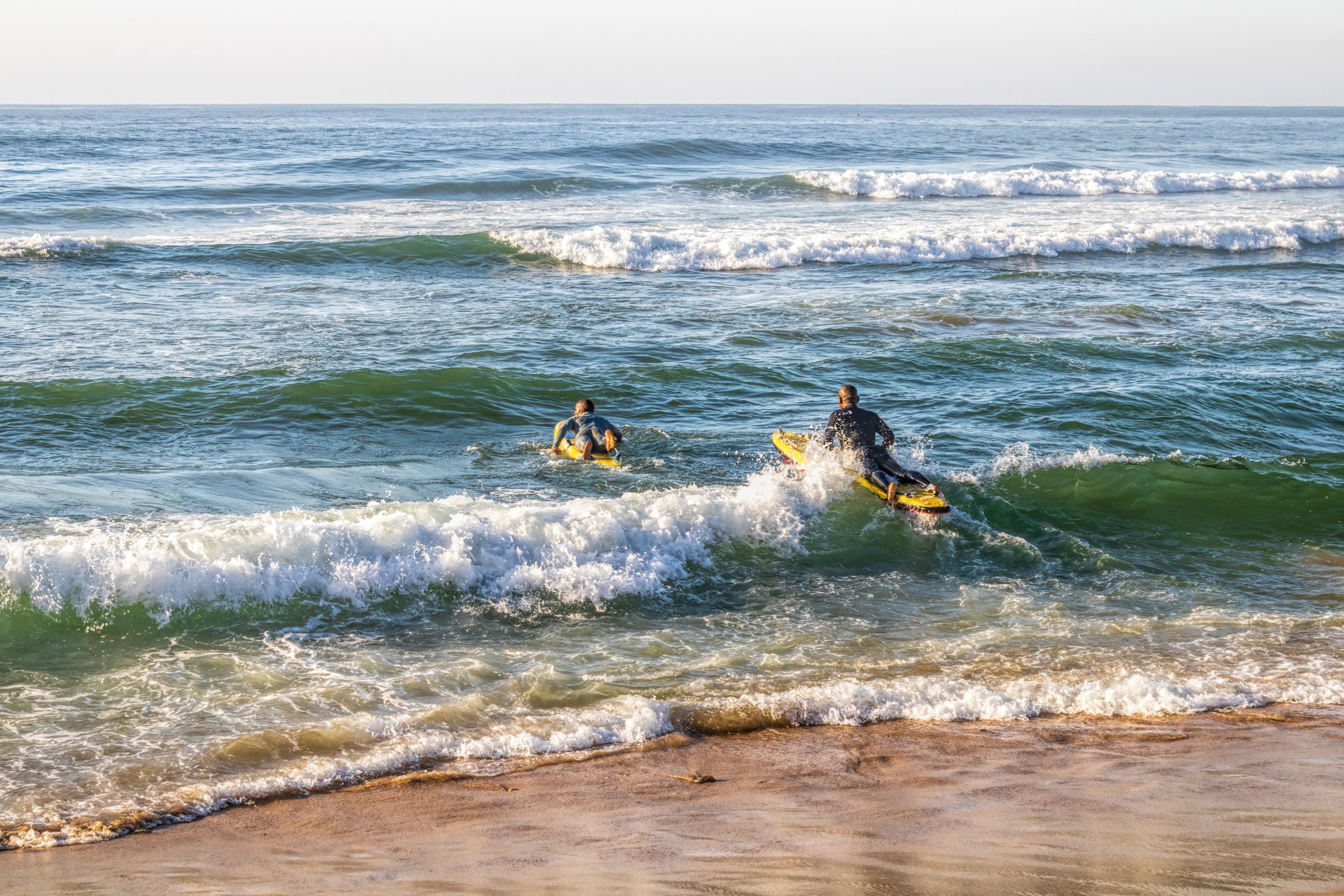
The National Sea Rescue Institute has echoed those warnings. Andrew Ingram, the NSRI’s head of communications, said rescue operations involving small craft and swimmers have increased as weather conditions improved. He identified key gaps in drowning prevention: people choosing beaches without lifeguard services, inadequate supervision of children, and bystanders attempting rescues without flotation equipment. “For beach visitors and swimmers, it’s most important to swim at a lifeguarded beach. Lifeguards will be able to help if people get into difficulty,” Ingram said. He cautioned the public against entering the water to rescue someone, even confident swimmers, without flotation equipment such as a Pink Rescue Buoy or surfboard. That initiative has saved lives, with 268 people rescued using the equipment, and community volunteers who maintain the buoys have been central to its success. Members of the public can sign up as custodians through the NSRI’s website.
Both organisations stress that preparation saves lives. Swimming lessons, water safety education and CPR training can reduce the impact of emergencies, but swimming ability should never replace supervision. Essop said anyone leaving children near water must formally hand over responsibility to another adult, and he warned that a person who seems fine after a non-fatal drowning may still develop respiratory complications from lung injury, making prompt medical assessment essential.
For citizens heading to the water this summer, the NSRI’s guidance comes down to three messages: avoid alcohol before swimming or boating, supervise children closely, and respect dangerous currents. Adults should stay within arm’s reach of children in the water, put phones away while supervising, and never assume someone else is watching. At beaches, swimmers should stay between the red and yellow lifeguard flags. Anyone caught in a rip current should not fight it, but float, swim parallel to the shore until clear of the current, and only then return to the beach.
In an emergency, help is within reach of every mobile phone. The national number 112 is free from a mobile, and the NSRI Emergency Operations Centre can be reached on 087 094 9774. The question now is whether, with lifeguards on duty, buoys in place and these numbers saved, the season ahead can be remembered for the days out rather than the emergencies.
Q&A
Why might bystanders fail to notice someone is drowning?
Silence, not splashing, is often the warning sign. A person who is drowning may be unable to shout, wave for help or attract attention, so the danger can go unnoticed by people nearby.
What are the NSRI's three core messages for the public this summer?
Avoid alcohol before swimming or boating, supervise children closely, stay within arm's reach of them, put phones away while supervising, and respect dangerous currents. Swim only at lifeguarded beaches, between the red and yellow flags.
What should a bystander do if someone is in difficulty in the water?
Do not enter the water, even if you are a confident swimmer. Use flotation equipment such as a Pink Rescue Buoy or surfboard instead. The buoy initiative has saved 268 people so far.
Which emergency numbers should the public save?
The free national emergency number 112 works from any mobile phone, and the NSRI Emergency Operations Centre can be reached on 087 094 9774.