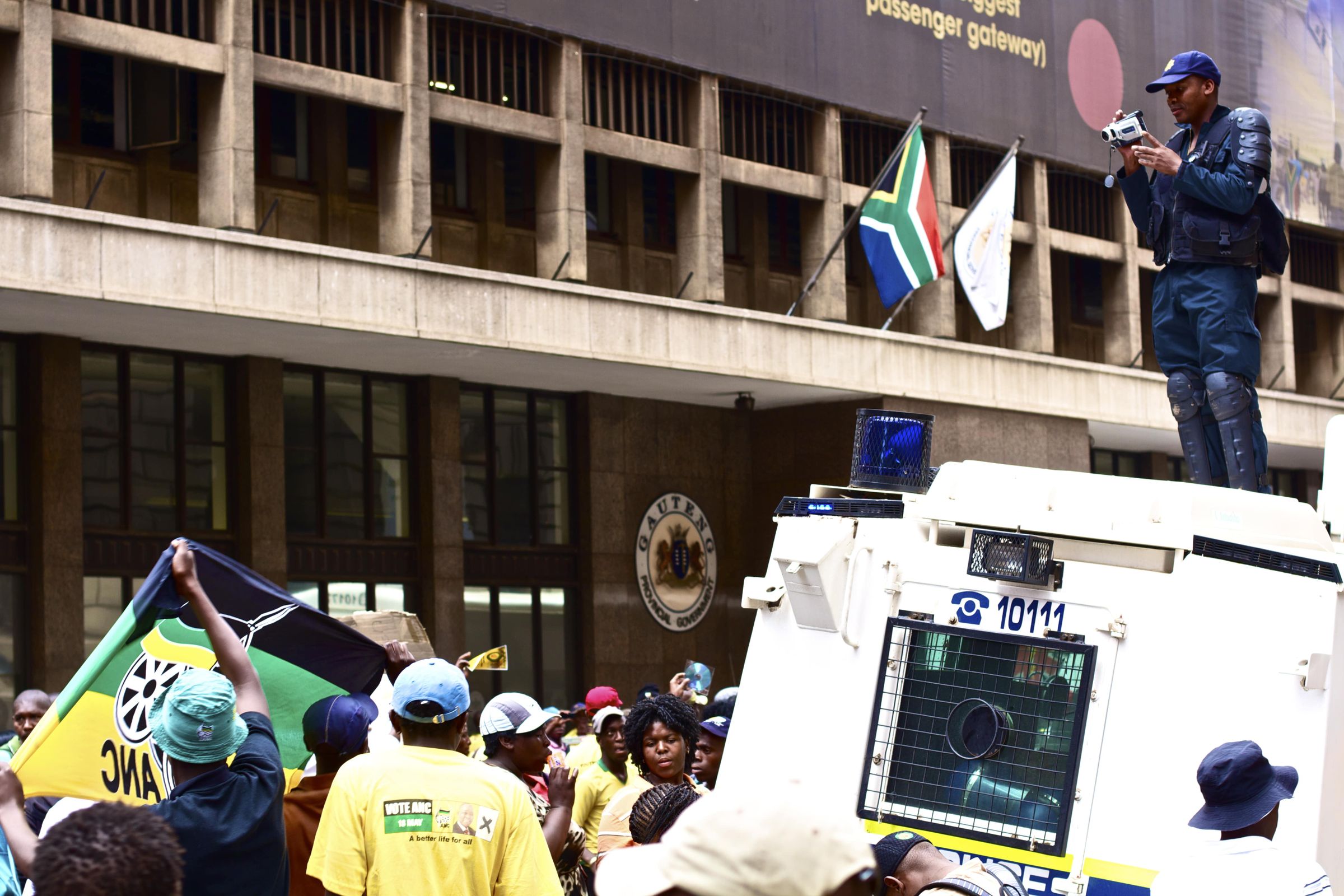
Lawley voters head to polls with daily life on the line
Residents say municipal vote is a test of whether daily life improves
Sabelo Zulu, a 37-year-old engineer, stood in line at Lawley informal settlement south of Johannesburg on Wednesday, waiting to vote in municipal elections that he and many of his neighbours described in strikingly personal terms. Not as a contest between parties, but as a judgment on whether their daily lives might finally improve. The queues there began forming around sunrise.
His stakes are concrete. Unreliable water and electricity, unemployment, crime and a lack of affordable housing ranked among the biggest concerns people carried with them to the polls. Zulu’s worry was that no single party would win a clear mandate. “If it goes to coalitions we don’t really have a say, they (political parties) have to compromise. The coalition thing is throwing us off,” he said.
His concern reflects a wider pattern. With no other party large enough to take the African National Congress’s place, many South African cities are heading for unstable coalition governments, arrangements partly blamed for failing to deliver basic services, including water and electricity. The ANC, the party of Nelson Mandela, fell below 50% support for the first time in municipal elections in 2021, and opinion polls suggest it could drop below 40% this time.
The frustration is felt even in the country’s commercial heart. Johannesburg is the biggest prize on Wednesday’s ballot, and control of the city remains up for grabs after an energetic campaign for mayor by Democratic Alliance candidate Helen Zille, who is projected to win the most votes but fall short of a majority. Power cuts and water shortages have worn down residents there. High unemployment and poor public safety add to the strain. Growing numbers of South Africans are fed up, even as the ANC retains the loyalty of some voters because of its role in ending apartheid.
Meanwhile, other metro areas will be closely watched. Tshwane, home to the administrative capital Pretoria, and eThekwini, which includes the port city of Durban, are both in play. In eThekwini, former president Jacob Zuma’s uMkhonto weSizwe party is strong. The DA is heavily favoured to retain control of Cape Town.
Local governance has long been a weak point for the ANC. The party was forced into a coalition with the DA and smaller parties after losing its national majority in 2024, and Wednesday’s results will test how far that erosion has spread to the municipal level. President Cyril Ramaphosa has acknowledged failures within his own party, even as he expressed optimism that it can recover. “Municipal failures have contributed to declining public trust and confidence in democratic governance,” he said, adding, “This election is an opportunity to turn this around.”
The consequences will reach well beyond city halls. The outcome will help shape the political landscape ahead of the 2029 national election, and it could influence the succession battle within the ANC as Ramaphosa nears the end of his term as party leader in 2027. For the party’s rivals, a weak showing would confirm that local anger over services is translating into lasting political change. For the ANC, it would raise hard questions about how to hold together a coalition-bound political system while its own support continues to slide.
Polls closed at 9 p.m. (1900 GMT), and results are expected on Sunday. Until then, the people who stood in queues from early morning, in places like Lawley and across Johannesburg, Tshwane, eThekwini and Cape Town, will wait to learn whether their votes change the way their cities are run, or lock in the coalition politics many of them say has left them without a real say.
Q&A
What were the main concerns Lawley residents brought with them to the polls?
Unreliable water and electricity, unemployment, crime and a lack of affordable housing.
What did Sabelo Zulu worry about regarding the election outcome?
He was worried no single party would win a clear mandate, saying coalitions force parties to compromise and throw voters off.
When did polls close and when are results expected?
Votes closed at 9 p.m. (1900 GMT), with results expected on Sunday.
What is projected for Democratic Alliance candidate Helen Zille?
Zille was projected to win the most votes for mayor of Johannesburg but fall short of a majority.