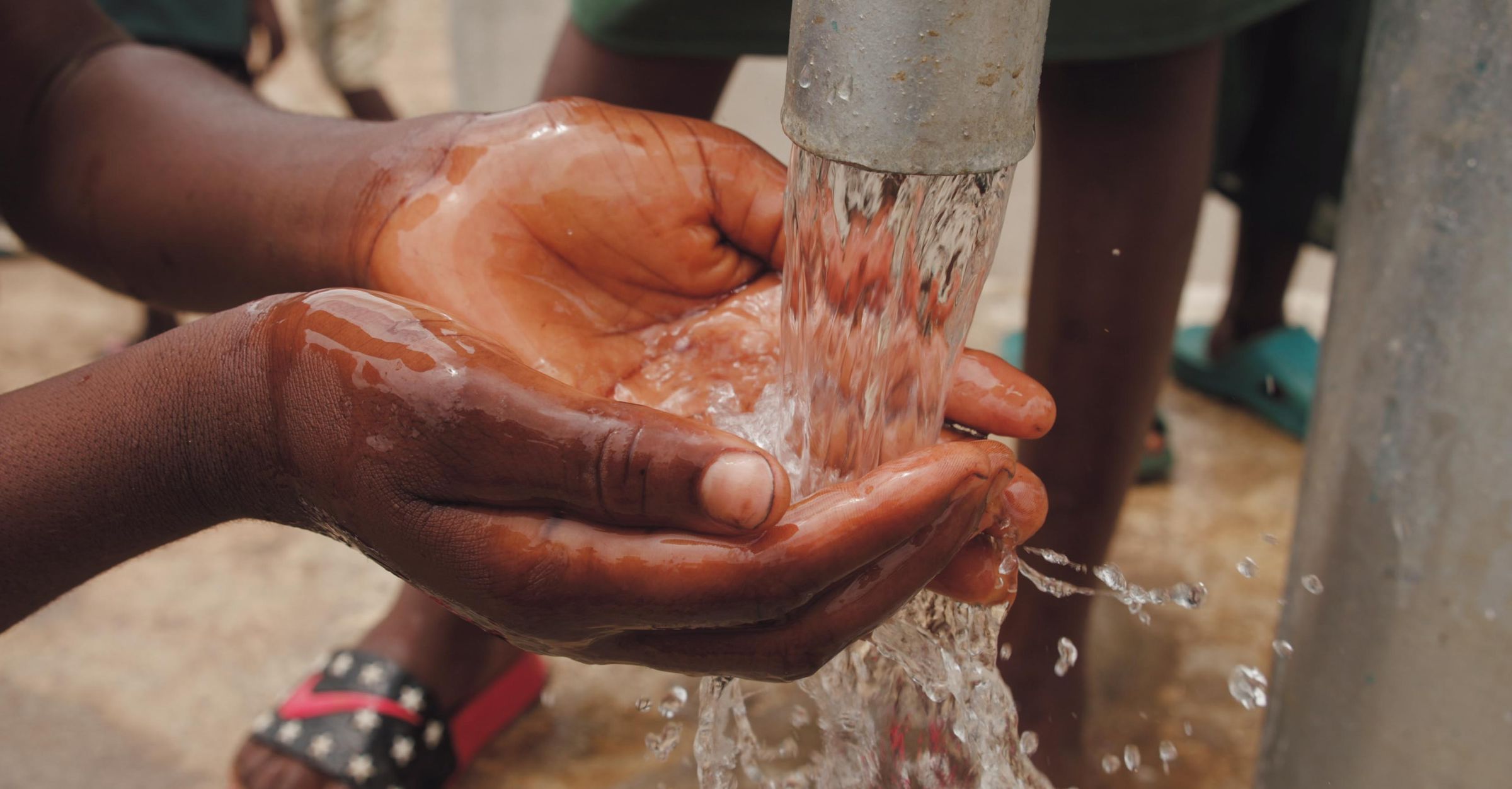
For millions of South Africans, the question of whether a tap works is not an abstraction of legal theory. It is a daily test of a promise made three decades ago, when the country’s constitution pledged equality and dignity to every citizen. Today, as interruptions of water supply grow more frequent and infrastructure continues to fail, that promise is being tested in courts, in municipal ledgers and in the homes of ordinary people who increasingly go days without running water.
The numbers tell a story of frustration. The share of households with access to piped water rose from 61% in 1996 to 82% in 2022, a genuine achievement of the democratic era. Reliability has moved in the opposite direction. In 2012, 24% of households reported water interruptions lasting more than two days. By 2024, that figure had climbed to 34%. Access, in other words, has expanded on paper while shrinking in practice.
Margo-Ann Werner, formerly a legal director at Pinsent Masons and now a director at Fairbridges, has watched this decline closely. “We have watched the [water] sector deteriorate and we are only now seeing government step up and take action at the point where it has reached a critical status,” she tells ALB. Her diagnosis is blunt: the laws are good, but the delivery has failed. “The frustrating point is that we have really good legislation, but it’s the implementation and the carrying out of what the legislation intends that falls short,” she says.
The framework itself is substantial. The National Water Act makes water supply a responsibility of government, while the Water Services Act defines the role of municipalities and the extent of their authority over the sector. Both sit under the Municipal Finance Management Act, which Werner describes as setting out “key provisions around how they manage their allocated budgets, as well as the revenue that they generate from their constituents and how they allocate those finance appropriately”. That financial statute matters, in her view, because it is municipal mismanagement of maintenance that has broken the essential functionality of the water system.
What citizens have experienced, Werner argues, is the consequence of disjointed administration rather than absent law. “It’s the disjointed and misaligned implementation of our overarching regulatory regime around water security, water supply and water services in South Africa,” she says. The infrastructure has been collapsing for a long time, and her team has observed that “over the years, the figures were getting worse and worse”. To the physical decay and the mishandled collection and distribution of revenue meant to upkeep the systems must be added another pressure: a growing population. Municipal authorities have failed not only to keep the infrastructure working but to expand its capacity to meet rising demand.
Change is now underway, though Werner stresses it has come only “off the back of the frustrations of South African citizens” who have endured the deterioration firsthand. The Department of Water and Sanitation, the presidency and non-governmental organisations have driven efforts to update the legal framework. A National Water Crisis Committee has been established as the government’s central coordinating body for a problem that is multi-faceted. Two amendment bills are under review. The Water Services Amendment Bill, enacted in September 2025, alters the 1997 Water Services Act “quite substantively”, according to Werner. The National Water Amendment Bill would revise the 1998 National Water Act.
“What we are seeing is really positive,” she says. “We have picked up issues with implementation, interpretation, gaps in enforcement of the legislation. That is what these amendment bills would look to try and [address] and make these key pieces of legislation a little bit more robust and a bit easier to implement.”
The reforms carry direct implications for how water reaches people. The National Water Act amendments are designed to address the equitable allocation of water to sectors that have been underserved. “For example, our agricultural sector is a significant water user,” Werner notes. “What other sectors require additional allocation? How can we better utilise our water resource as to preserve it?” The Water Services Bill proposals would introduce a licensing regime for water services providers, meaning the municipalities, allowing the Department of Water and Sanitation to “actually implement enforcement measures against municipalities that are not performing appropriately in terms of how they are managing the water resources as a water services provider and authority”.
There is also an opening for the public itself. Werner is hopeful that the comment period given to South Africans to review the reforms will let legal, engineering and water sector specialists help “craft this legislation so that it really is fit for purpose and can feasibly achieve what it intends to”.
Meanwhile, the country has moved on the climate front, enacting its Climate Change Act in 2024, though only after an earlier version was diluted following a campaign by pro-fossil fuel business groups, to the frustration of climate activists.
For Werner, the through-line is the founding purpose of South Africa’s legal order, which was built to move the country out of apartheid and into a democracy recognising the rights and dignity of all. “Acknowledging the inequalities of our past has in fact been integrated into our constitution and has flowed down into our water legislation,” she says. “Let us now see effective implementation of our legislation so that those inequalities can be alleviated finally.”
Whether the new licensing regime and enforcement powers translate into taps that run, rather than statutes that read well, is the question households across the country will be watching in the years ahead.