India Puts Africa at Center of Its Foreign Policy
Scholarships, trade, and naval aid bring India's Africa ties home to daily life
When India’s External Affairs Minister S. Jaishankar stood before an audience in April 2026 to unveil the theme and logo of the Fourth India-Africa summit, he framed the relationship in terms people on both sides could feel directly: “Africa occupies a central place in India’s foreign policy.” The summit itself was later postponed because of the Ebola epidemic, but the commitment behind those words did not stall. In October, Jaishankar set out on a three-day tour of Ghana, Cote d’Ivoire, and Ethiopia, saying the purpose was “to deepen India’s partnership with Africa and further India’s solidarity with the Global South.”
For the students, farmers, health workers, and coastal communities whose lives these ties touch, the relationship is not an abstraction. It rests on a framework laid out in July 2018, when Prime Minister Narendra Modi addressed the Ugandan parliament in Kampala and set out 10 principles to define New Delhi’s ties with the continent. Those principles affirmed that Africa would sit at the top of India’s foreign policy agenda, with the partnership shaped by Africa’s own needs. The focus areas were practical and close to daily life: agriculture and food security, trade and investment, digital transformation, maritime security, and climate change. The two sides would also work together toward “a just and democratic global order.”
The measurable results over the past decade show how those principles have reached ordinary people. Bilateral trade has reached about $100 billion, and cumulative Indian investments have crossed $10 billion. India has provided 190 lines of credit valued at $10 billion for projects across 40 countries. Most tangibly for individuals, nearly 80,000 scholarships and skill development slots have gone toward capacity-building in health, agriculture, and technology, opening paths for young Africans to train in fields that shape their communities’ futures.
Recent initiatives have pushed further into economic and knowledge development, technology, and security. Development finance is shifting from lines of credit toward foreign direct investment, supported by public and private finance from India’s expanding banking presence. On the digital front, India has taken the lead in developing Digital Public Infrastructure, while also setting up IT training centers and centers of excellence specializing in data science and artificial intelligence, institutions intended to equip African workers and students with skills for a changing economy.
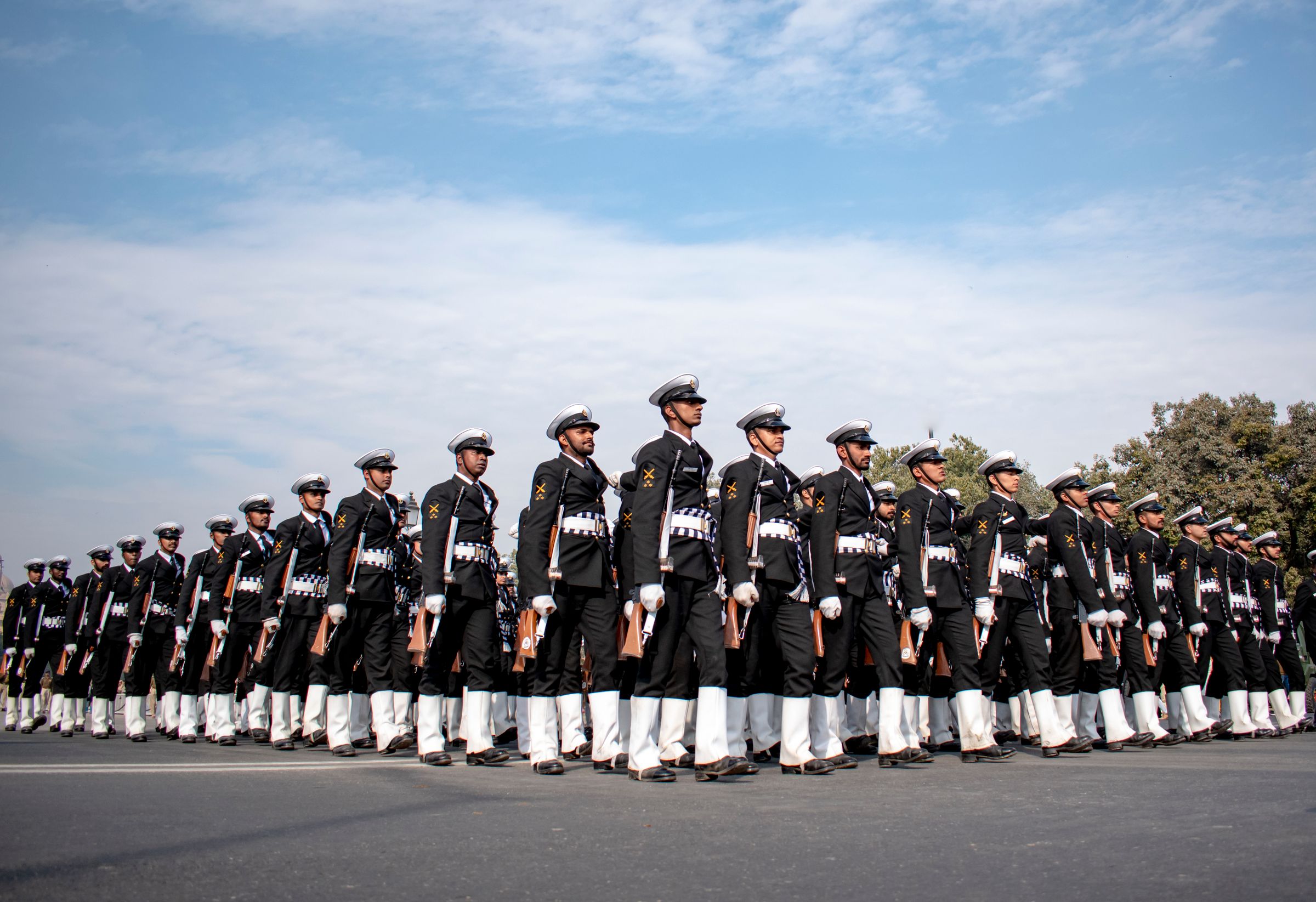
Security cooperation, too, is understood through its human consequences. Africa’s long coastlines, numerous ports, and hinterlands rich in agricultural produce, energy resources, and mineral wealth give it geopolitical weight, and India’s outreach embraces shared concerns that affect people living along those shores: piracy, maritime terrorism, illegal fishing, narcotics trade, and human trafficking. The Indian Navy was an early responder during regional cyclones and during the pandemic, when it transported vaccines and medical equipment to Africa. India’s latest naval doctrine positions the country as a net security provider and first-responder in regional emergencies, a role reinforced by the “Africa-India Key Maritime Engagement,” a six-day naval exercise held at Dar es Salaam in April 2025.
Those exercises are backed by capacity-building courses for defense personnel at Indian institutions, covering defense management, cybersecurity, counter-insurgency, and jungle warfare. Senior officers on both sides, at the level of ministers and service chiefs, are in dialogue on tactics, strategic issues, and defense industry cooperation.
Meanwhile, the wider context explains why the stakes have risen. The US 2025 National Security Strategy described Africa as “a central node in the world’s geostrategic and economic reconfiguration (and) the arena where the (global) balance of power and the very architecture of future interdependence will be defined.” Africa has put its African Continental Free Trade agreement into operation, creating an integrated market of 1.3 billion people, and holds 30 percent of the world’s critical minerals and metals while rapidly developing its digital infrastructure and industrial manufacturing.
The nature of engagement has changed as well. The colonial scramble for Africa in the 19th century saw great power competitions for resources that were intrusive, exploitative, and violent. Africans today will not tolerate such interventions from former colonial states or new nations seeking to profit from the continent’s resources. They demand transparency and value-creation from all foreign players. As the UK-based think tank Global Geopolitics has pointed out, present-day Africans wish to assert sovereignty over their geopolitical assets and hinterland resources, and to ensure that value-added gains from their activities benefit Africa.
That thinking resonates with India’s Kampala principles and will shape its outreach. Priority areas include agritech, AI-enabled learning, green energy, digital finance, and advanced manufacturing, including data centers, batteries, robotics, and smart factories. On critical minerals, India is looking at joint processing, refining, recycling, and downstream manufacturing with integrated continent-wide value chains. India also sees the link between energy and food security: Africa is a major producer of conventional fuels and, like India, is committed to increased use of renewable energy, with cooperation focused on grid modernization, digitizing power distribution, and developing best practices in energy management. Maritime security cooperation will emphasize coastal radar and surveillance systems, port technologies, and coast guard and naval training, alongside peacekeeping and conflict management initiatives, particularly those sponsored by the UN or the African Union.
A fuller picture of this expanding relationship, and the strategic reasoning behind it, can be found at https://www.arabnews.com/opinion/shared-strategic-interests-guiding-indias-expanding-outreach-to-africa-3008994. In coming years, India’s ties with Africa are expected to be both multifaceted and substantial. Jaishankar captured the trajectory during his recent visit to Ethiopia: “Freedom brought our nations together. Development has now brought our economies together. And today, the transformation of the international order is bringing our strategic interests and goals together.” The author, Talmiz Ahmad, is a former Indian diplomat.
Q&A
How have ordinary Africans directly benefited from India's partnership with the continent?
Nearly 80,000 scholarships and skill development slots have supported capacity-building in health, agriculture, and technology, opening paths for young Africans to train in fields that shape their communities' futures.
What role does the Indian Navy play for people living along Africa's coastlines?
The Indian Navy was an early responder during regional cyclones and the pandemic, transporting vaccines and medical equipment to Africa, and its latest doctrine positions India as a net security provider and first responder in regional emergencies.
What are the Kampala principles and when were they announced?
Set out by Prime Minister Narendra Modi in July 2018 before the Ugandan parliament in Kampala, the 10 principles place Africa at the top of India's foreign policy agenda, with the partnership shaped by Africa's own needs.
How do Africans view foreign engagement with the continent today?
Africans today will not tolerate the intrusive, exploitative interventions seen during the 19th-century colonial scramble; they demand transparency and value-creation, wanting value-added gains from their resources to benefit Africa.