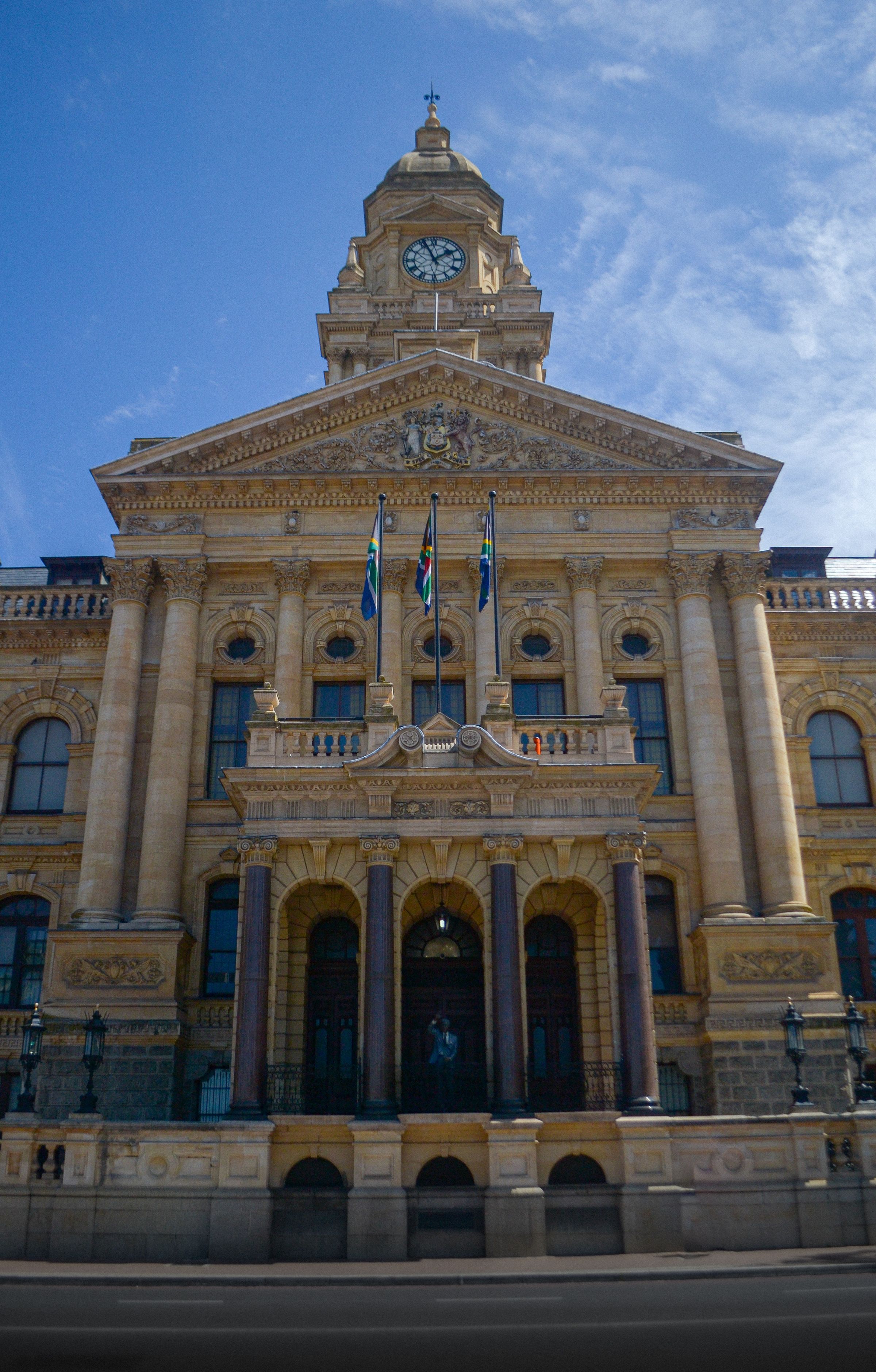
Jobs and credibility at stake in Parliament letter feud
Parliament disputes claims it says endanger jobs, aid and public trust
A 32.9% unemployment rate hangs over the exchange between parliamentary committee chairperson Supra Mahumapelo and Lex Libertas representative Ernst Roets. Behind the open letter and the reply sit the livelihoods of workers, the credibility of public hearings, and the question of who speaks for South Africans abroad.
The dispute began when Roets, writing on behalf of Lex Libertas, addressed an open letter to Minister of International Relations and Cooperation Ronald Lamola, naming Mahumapelo, chairperson of the Portfolio Committee on International Relations and Cooperation. Parliament confirmed the matter on Monday, 19 October 2026.
For ordinary citizens, the most concrete issue is economic. Mahumapelo’s statement points to some 600 United States companies employing 250 000 South Africans, and to South African access to AGOA, PEPFAR and concessional funding currently under review. When organised campaigns encourage disinvestment and sanctions, he argued, the consequences fall on workers, farmers and the poor, black and white alike. In his words, criticising the government out of love for South Africa is patriotic, but inviting foreign punishment of the country because one dislikes the government is something else entirely.
Meanwhile, the committee sought to correct what it calls misinformation with direct public consequences. It stated plainly that claims of state-sponsored “white genocide” or state-sanctioned “farm attacks” are false, noting that crime statistics, court judgments and independent fact-checkers have repeatedly shown this. It rejected as false the claim that the Expropriation Act of 2024 permits arbitrary seizure of land without compensation or judicial oversight, pointing out that Section 25 of the Constitution and the Act itself require just and equitable compensation and court adjudication. It described the framing of broad-based black economic empowerment as “race-based discrimination” justifying foreign sanctions as a deliberate distortion of a constitutionally mandated redress measure under Section 9(2).
Mahumapelo argued that when such claims are taken to the United States and presented as fact to secure visa bans on South Africans, trade penalties and aid withdrawals, the matter stops being domestic debate and becomes a foreign policy question the committee must oversee.
On the sensitive question of citizenship, the chairperson was categorical. No one on the committee has proposed stripping citizenship as punishment for holding a different political view. He cited Section 20 of the Constitution, which provides that no citizen may be deprived of citizenship, and the recent Constitutional Court judgment in Democratic Alliance v Minister of Home Affairs, which reaffirmed the profound importance of citizenship. What was raised in Parliament last week, he said, was a principled policy question under Section 55(2): how a sovereign state should respond when private organisations systematically engage foreign governments to impose punitive economic measures, visa restrictions and public narratives that harm the national interest. He added that freedom of expression under Section 16 does not extend to propaganda for war, incitement to imminent violence, or advocacy that deliberately misrepresents the country for material advantage.
By contrast with the speculation about new laws, the statement confirmed that no draft Bill has been tabled and no citizen has been charged. The committee was exploring, as committees do, whether existing frameworks, including the Regulation of Foreign Military Assistance Act, the Protection of Constitutional Democracy Against Terrorist and Related Activities Act, and the Codes of Conduct for civil society organisations, are adequate. Mahumapelo agreed with Roets’s distinction between the rule of law and rule by law, saying any future proposal would have to pass constitutional muster, public participation under Section 59 and judicial scrutiny.
The committee also rejected the notion of “ceremonial listening”, noting that Parliament has held hearings on the Expropriation Act, on B-BBEE and on the state of US-SA relations, and that Lex Libertas and other organisations were free to participate, though many chose not to. It stated that neither Lex Libertas nor its representatives has ever approached the committee for audience, calling Roets’s suggestion that all doors are closed misleading and disingenuous. The invitation stands: present evidence on farm attacks, property rights and transformation legislation under oath, in public and subject to questioning, rather than before a foreign legislature.
Mahumapelo closed with a direct challenge and a reassurance. “We will not threaten anyone but we will not be intimidated out of our oversight role either. If anyone has evidence of wrongdoing by government, bring it to Parliament. Bring it to court. Bring it to the Chapter 9 institutions.” He said his call for consequences was a call for accountability for misinformation that harms the country, not for arbitrary stripping of citizenship, and that if Roets is confident his claims are true he should welcome the chance to defend them before Parliament. He also expressed hope that the narrative by Libertas and others is not a method to create a possible victim whose rescue plan is embedded in fundraising.
The committee says it will continue its work to recalibrate US-SA relations, protect South Africa’s sovereignty and constitutional order, and defend the rights of all South Africans, including the right to disagree. Whether Roets takes up the invitation to testify under oath remains the open question. Media inquiries may be directed to committee Media Officer Sureshinee Govender.
Q&A
What economic stakes do ordinary South Africans have in this parliamentary dispute?
According to the committee chairperson, about 600 United States companies employ 250 000 South Africans, and access to AGOA, PEPFAR and concessional funding is under review. Campaigns encouraging disinvestment and sanctions would hit workers, farmers and the poor, black and white alike.
What did the committee say about claims of white genocide and farm attacks?
The committee stated these claims are false, noting that crime statistics, court judgments and independent fact-checkers have repeatedly shown this. It also rejected the claim that the Expropriation Act of 2024 allows arbitrary seizure without compensation or judicial oversight.
Is Parliament planning to strip citizenship from anyone?
No. The chairperson said no one on the committee proposed stripping citizenship for holding a different political view, citing Section 20 of the Constitution. No draft Bill has been tabled and no citizen has been charged; the committee was exploring whether existing frameworks are adequate.
What invitation has been extended to Lex Libertas and Ernst Roets?
Present evidence on farm attacks, property rights and transformation legislation under oath, in public and subject to questioning, rather than before a foreign legislature. The committee says neither Lex Libertas nor its representatives has ever approached it for audience.