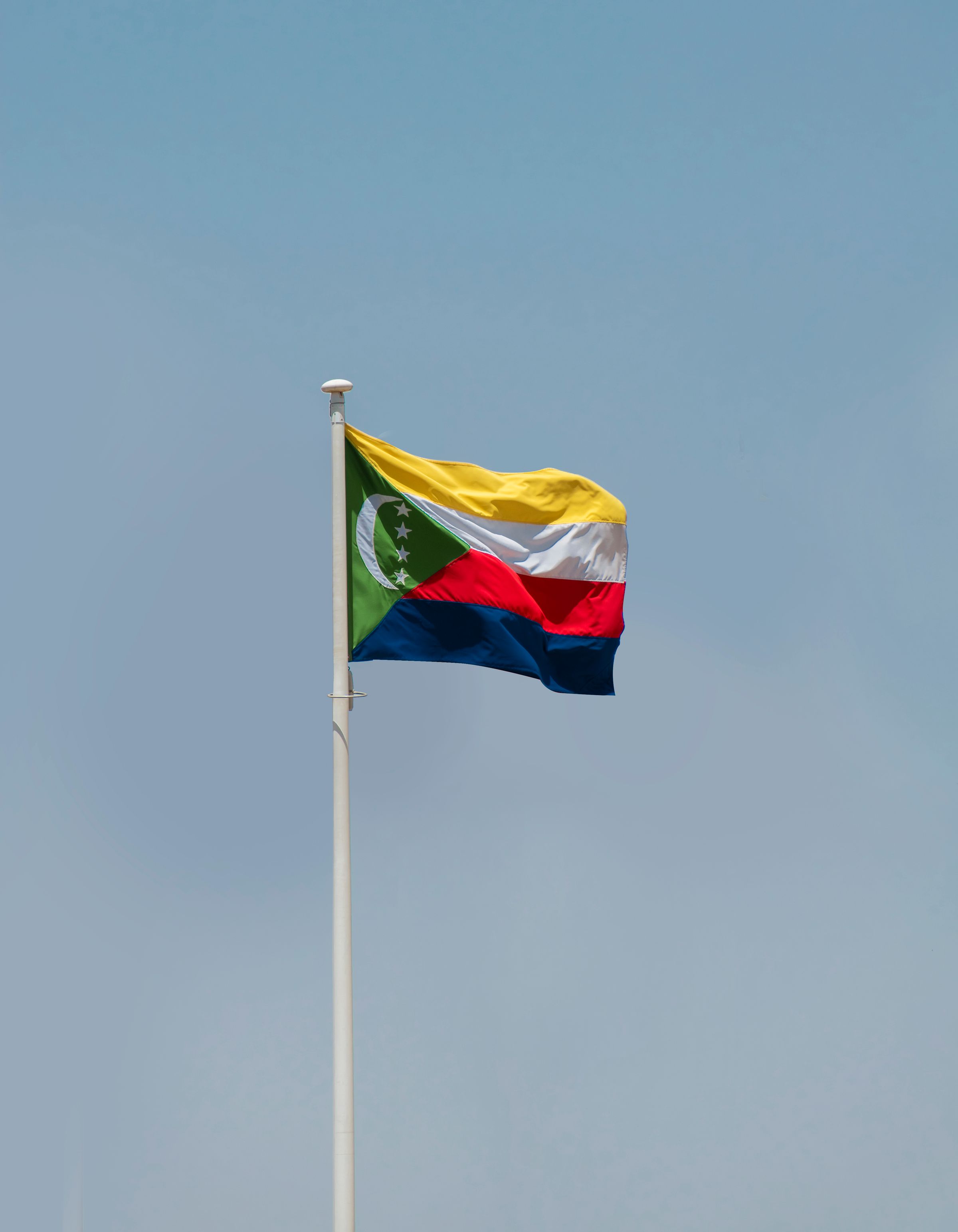
The Comoros government says it is preparing judicial action against an unauthorised licensing regime operating under the name of Anjouan, one of its islands, and has asked the UK government and its law enforcement bodies for assistance. The request puts the accountability question squarely before British institutions: who authorised a regime that the Comoros government describes as a fiction, and which regulators will act on it.
The Central Bank of the Comoros, in a statement, called the regime’s activities “illegal” and said individuals were “abusively using the name of the Comoros Islands to give themselves apparent legitimacy”. The government described the matter as one of “serious concern”, saying it undermined national efforts to strengthen safeguards against money laundering and terrorist financing.
Additional reference context is available at https://www.theguardian.com/society/2026/oct/19/revealed-britons-using-an-african-islands-name-to-aid-underground-gambling.
The Guardian’s investigation, published under the headline “Revealed: African island fights offshore gambling network linked to UK family”, traces the apparatus not to Anjouan itself but to an arrangement run from north London. The island, known locally as Nzwani, sits in the Indian Ocean between Mozambique and Madagascar, and its name has become attached to a sprawling network of offshore online casinos, many accused of operating illegally, targeting vulnerable customers, or refusing to pay winnings.
At the centre of the arrangement sits Anjouan Corporate Services, which presents itself as the gateway to legitimacy. It offers “expert guidance” to prospective licence holders in banking, cryptocurrency and, apparently, gambling for £19,000, while disclosing nothing about its ownership. A brochure lists a UK mobile number and an email address bearing the initials TS, matching a LinkedIn profile belonging to Toby S, described as head of licensing. Public records indicate this is Toby Sorsky, son of Elliot Sorsky. The Australian Broadcasting Service last year published a photograph of the two men together at a business conference in Dubai.
UK corporate records deepen the picture of who stands behind the regime. Four Sorskys, Elliot, Harold, Richard and Michael, have owned stakes in ACS Global Custodian, the UK company behind the Anjouan Corporate Services website. ACS Global Custodian operates from the same address as the Sherm Group, a family property business with a portfolio worth more than £25m, and its cash reserves jumped from £13,130 to £614,826 in 2025, overtaking those of Sherm’s property division. That increase coincided with a rush of online casinos seeking Anjouan licences. According to the Anjouan Offshore Financial Authority, applicants “must submit” their applications to Anjouan Corporate Services.
Harold Sorsky rejected any connection. He said ACS was “not involved in gaming licences”, accusing the Guardian of “advancing a narrative that is entirely untrue and unsupported by the facts”. “ACS Global Custodian Ltd does not sell, issue, or otherwise provide gaming licences and has not done so since we took over the company in 2023,” he said, adding that any reference to ACS supporting gaming licence applications was outdated and predated the transfer of that function to another specialist provider. He also stated that, apart from sharing the same directors, Sherm Group had “absolutely no affiliation whatsoever” with ACS, describing the two as completely separate entities.
The operational centre sits in a nondescript four-storey office block in Finchley, where Sherm Group is based. Its managing director, Elliot Sorsky, 57, maintains a low public profile, though his recently deleted LinkedIn page claimed degrees from Harvard, Cambridge and Oxford, including one in property maintenance and real estate. Oxford said no such degree existed.
Meanwhile, the Comoros government told the Guardian that “British citizens have been identified” in connection with the unauthorised regime, and that “international cooperation efforts are under way, both in terms of financial intelligence and police collaboration”, involving a direct request for UK assistance. A Treasury spokesperson declined to comment.
The scale of the licensing register is considerable. The Anjouan Gaming Authority lists nearly 1,500 licence holders, many specialising in crypto gambling. Among the best known is BC.Game, which sponsored Leicester City FC’s shirts and has been accused of accepting bets from UK customers without holding a British licence. A newer operator, BetBolt, drew attention with stunts featuring the porn actor Bonnie Blue, whom it claimed to have paid $1.2m (£910,000) in an auction to name her newborn baby, and the far-right activist known as Tommy Robinson, real name Stephen Yaxley-Lennon, who appeared as a guest croupier. A spokesperson said BetBolt did not take bets from UK gamblers and that the events were “simply” for brand awareness.
For oversight bodies, the most troubling pattern concerns self-exclusion. In the UK, the national GamStop tool allows players to lock themselves out of licensed betting, and legitimate operators are required to honour it. Multiple Anjouan licensees are marketed online as “not on GamStop”, targeting people regulators and experts say are likely wrestling with addiction. In a test, the Guardian signed up with one such site, SlotsCharm, and placed multiple slot bets; when the bets stopped, its representatives made more than 100 calls and emails offering incentives to continue. A spokesperson said the site was regulated by “our internal rules” and that it was “your choice if you want to play with us or not to play”.
By contrast, the migration to Anjouan from Curaçao, the offshore industry’s traditional home, is instructive on transparency. Last month’s vast data leak from Curaçao’s gaming regulator exposed ownership and financial flows, prompting an exodus. Anjouan’s register discloses only company names, frequently in opaque jurisdictions such as Panama, Belize and Costa Rica. At the iGB Live industry conference in London, one attendee summed up the calculus: “Curaçao is getting crazy right now. You can’t do this, you can’t do that. Anjouan is very easy. So why spend £80,000 on a Curaçao licence when you can spend £20,000 on an Anjouan one?”
Whether that calculus survives depends largely on how Britain responds to the request now on the table, an appeal from the Comoros government to its own institutions for cross-border enforcement.