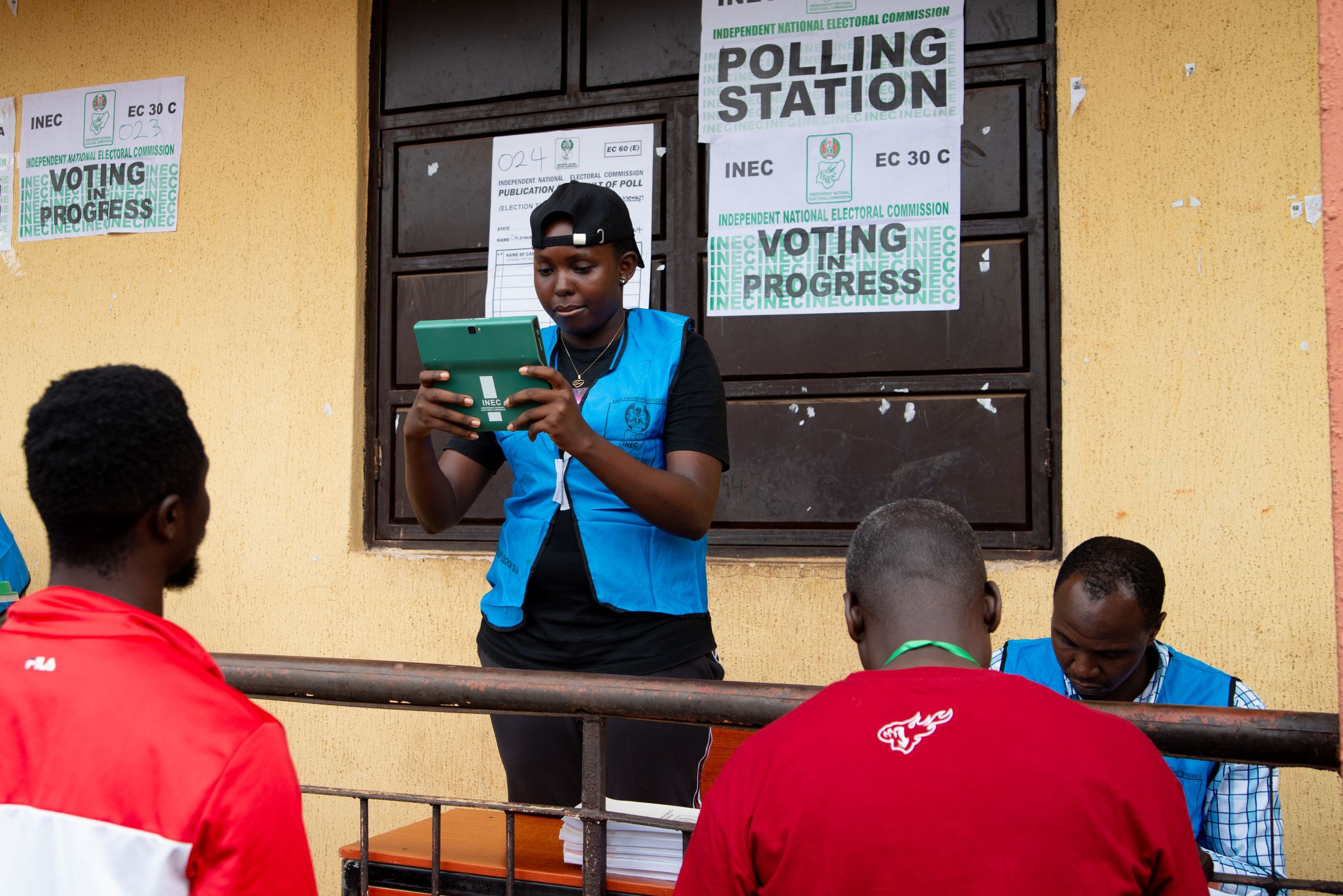
When South Africans go to the polls on 4 November to choose their local governments, the outcome will be shaped not only by those who show up but by the millions who decide it is not worth the trip. That is the quiet civic question hanging over this election: the services people depend on every day, from water and electricity to sanitation, roads and refuse collection, will be decided by councils chosen by a minority of registered voters.
The arithmetic is stark. In the 2021 local government elections, some 26.2 million South Africans were registered to vote, but only just over 12 million did, a turnout of 45.87%. Put five registered voters in a room and almost three of them stayed home. The problem is not a lack of choice. In August, the Electoral Commission of South Africa said there were 674 registered political parties, and a record 136 790 candidates have since been certified to contest just over 10 500 council seats. The country has no shortage of parties; it has a shortage of voters.
Low participation is not uniquely South African. Across 74 national elections held around the world in 2024, average turnout was 61%, according to International IDEA, an intergovernmental organisation that works to strengthen democracy and democratic institutions. Public attention, meanwhile, tends to focus on which party people will choose, while far less is asked about the people choosing none of them.
That gap is what brought 34 political leaders and campaign practitioners from 12 African countries together this week for five days of training in how to run and manage political campaigns. The executive course, now in its third edition, is run by the Political Campaigns Resource Hub in partnership with the University of Cape Town; the first cohort had six participants and the second had 12. It forms part of a wider push to professionalise political campaigning in Africa. Many in the room were already campaign managers, strategists and political leaders, some with years of experience, but what they often lacked was data to back up their instincts, or formal training that could turn knowledge into something testable.
Much of the discussion centred on making that data more granular. Knowing that turnout is low tells you something; knowing where it is low, which voters are staying away, whether they voted before, what matters to them and why they stopped participating tells you far more. For citizens, better-trained campaigners should mean better-organised parties that understand the communities they want to represent and respond more effectively to everyday needs. In this election those needs are immediate: water, electricity, sanitation, roads and refuse collection dominate the campaign. The same data, however, also tells parties which messages are most likely to move voters, which raises the stakes for public awareness of how persuasion works.
One of the simplest ideas discussed was among the most important: elections are won between elections. A party must mobilise the voters it already has, identify the undecided and, crucially in South Africa, understand those who have stopped voting altogether. That last group matters because losing faith in one party does not necessarily mean voting for another. Research published in 2023 in the peer-reviewed journal African Affairs, using data from the Centre for Social Change and the Ask Afrika 2021 Election Survey, examined voting behaviour across the 2016, 2019 and 2021 elections. Among black African respondents, 18% voted for the African National Congress in both 2016 and 2019 but abstained in 2021, while another 9% moved to an opposition party. For some, leaving the ANC meant staying home rather than finding a new political home.
For parties hoping to win on 4 November, understanding who those people are, where they are and why they stopped voting is essential. Persuading them is not enough if they do not actually vote. Getting out the vote, as campaigners put it, must be built into a campaign from the beginning rather than treated as a final-week scramble. For parties starting to think seriously about voters only now, it is already too late; a serious campaign should have been running for months.
Better campaigns can listen more closely, understand communities better and communicate more effectively, but they can also become far more sophisticated at influencing voters. The more parties know about who people are, what worries them and what might persuade them, the more important it becomes that citizens understand not only what parties are telling them but why. On 4 November, the election will be decided by those choosing between parties on the ballot, and equally by the millions deciding whether turning up is worth it at all.