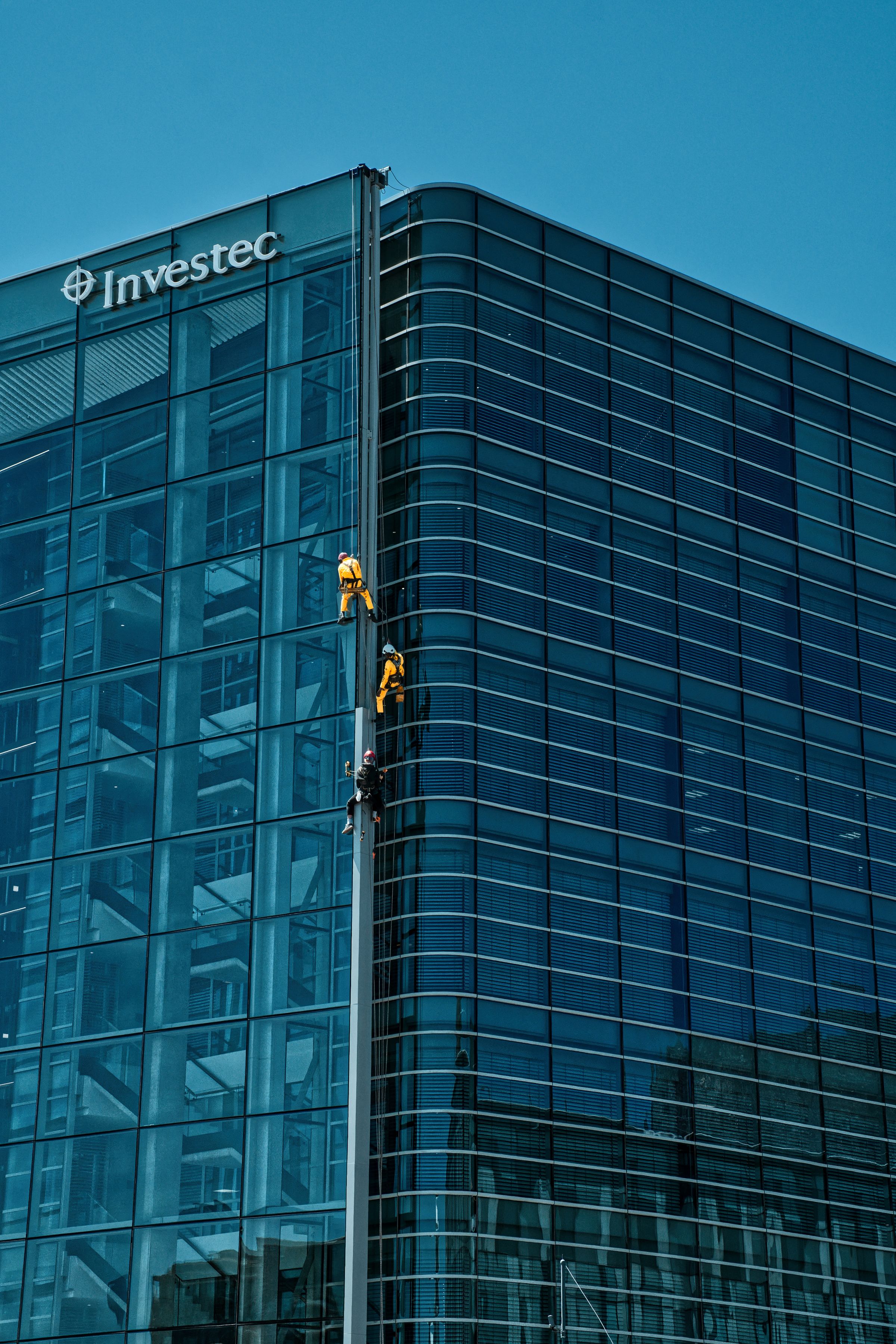
Godongwana Faces Budget Day with SA Awaiting Fiscal Answers
Households wait as the finance minister lays out three years of public spending
For Finance Minister Enoch Godongwana, Wednesday, 21 October is the day he must stand before the country and explain, in hard numbers, what the next three years of public money will look like. His annual Medium-Term Budget Policy Statement is the blueprint of the fiscal framework and policies for the coming three-year period, complete with projections, and it sets the stage for the annual budget in February. For the households and communities who depend on government services, what he says matters in the most direct way: borrowing costs determine how much money is left over for the services people actually use.
He approaches the podium with more wind in his sails than might have seemed possible a year ago, even though headwinds remain everywhere. One boost has come from the rally in gold and platinum group metals prices, which has lifted Treasury revenues over the first five months of the fiscal year compared with the same period last year. “An improvement in revenues has occurred, at 39% of budget versus 37% this time last year, on the rally in precious metals prices,” Investec chief economist Annabel Bishop said in a note on the MTBPS.
The mining sector, whose workers and towns live and die by commodity cycles, has felt this acutely. According to PwC’s latest annual survey of South Africa’s mining sector, income taxes paid by the industry in the 12 months to the end of June soared 123% to R53-billion. Increased commodity exports have also helped keep the rand on a relatively stable footing.
Since Godongwana’s last MTBPS in November last year, South Africa has received its first credit rating upgrades in two decades, a reflection of the Treasury’s efforts, against all odds, to pull itself out of the deep hole dug during the Zuma era. The trend began in November last year when S&P Global Ratings lifted its South African rating a notch and kept a positive outlook for future upgrades, citing Eskom’s improved performance and a brightening fiscal and growth outlook. Pointedly, that announcement came just a couple of days after the 2025 MTBPS was unveiled. Fitch followed suit in June this year, and Moody’s shifted its outlook on South Africa to positive from stable. All of the “big three” agencies now have the country two notches below the coveted investment-grade status it held before Jacob Zuma and his cronies began their looting spree.
These upgrades are not academic exercises. They lower borrowing costs, making more funds available for government services, and they signal growing international confidence in South Africa’s ability to keep its debt from reaching unsustainable levels. Among other things, the finance minister needs to make a convincing case on Wednesday that South Africa can stabilise its debt at 80% of gross domestic product within the next two years and bring it down from that peak.
Improvements at the South African Revenue Service have been a major help on this front. But SARS can only squeeze so much, and favourable trends like the precious metals commodity cycle cannot last forever. Godongwana’s elusive goal for years, going back to his time as the ANC’s main economic policy wonk, has been faster growth. If an economy grows 5% in a year, revenue typically rises by more than that because of multiplier effects, and the debt-to-GDP ratio, the metric markets and ratings agencies watch like a hawk, falls significantly.
Alas, the economy remains stuck in a low-growth trajectory, contracting 0.2% in the second quarter of this year. On Tuesday, 13 October, the International Monetary Fund cut its growth forecast for South Africa this year to a woeful 1.0% and projected just 1.3% for next year. It noted, however, that this should “improve gradually over the medium term, underpinned by strengthened policy frameworks and ongoing structural reforms”. Those include business-government partnerships gaining traction on a range of fronts, and the slow-motion privatisation and unbundling of Eskom.
“Ultimately, when the financial resources of a country run dry, but the politicians still need to get things done, then they will default to where they can find the resources and skills to do that, and that will be the start of a privatisation drive,” George Glynos, head of research at ETM Analytics, told Daily Maverick.
South Africa also got itself removed from the Financial Action Task Force greylist in October 2025, which speaks to efforts to clamp down on criminal activity such as money laundering, although the Madlanga Commission has thrown into sharp relief the gangsterism that still defines much of the state.
By contrast, the United States under President Donald Trump presents an arresting picture. Trump has made preposterous claims about “white genocide” in South Africa and branded African nations as “shithole” countries, yet he is squatting over a reeking pit latrine he dug himself. The yields on South Africa’s benchmark 10-year government bonds were down about 20 basis points as of mid-October, at about 8.90% compared with a year earlier. US 10-year Treasury notes, meanwhile, are up about 120 basis points over the same timeframe, to 5.22%.
“Trustworthy borrowers with solid finances and honest leadership pay less. Distrusted borrowers with disordered finances and corrupt leaders pay more,” senior editor David Frum recently noted in The Atlantic. “In times past, the United States would have headed that first list. Under President Trump, the United States has tumbled onto the second one. The United States now pays more to service its debt than it spends on national defense.”
While Godongwana pulls every lever he can to cap South Africa’s mounting debt, the US is in an accelerating debt spiral far outpacing its current growth rate of 2.3%. When Trump began his second term last year, the US national debt stood at $36.2-trillion. In August this year it shot past the $40-trillion mark despite the chainsaw wielded by Elon Musk, a surge of almost $4-trillion in 19 months. America’s debt-to-GDP ratio is now approaching 125%, about double its average for the past 75 years, and at current growth rates it cannot grow its way out of the mess anytime soon.
The world’s largest economy is also rapidly becoming a gangster state, and criminality and fiscal decay go hand in hand; the Zuma era springs to mind. The watchdog American Oversight notes that during the first year of Trump’s second term he amassed more than $2 billion in new wealth, and that his cryptocurrency empire, suspiciously timed investments, high-profile pardons, lawsuit settlements and building projects raise concerns that he is abusing the presidency for profit. Trump’s company and financial portfolio are not in a blind trust, and what he says moves markets. In February this year he bought Boeing stock shortly before announcing China’s purchase of 200 planes from the company, one of more than 28,000 trades he or his money managers has made since he returned to office. Then there was the $400-million Boeing that Qatar “gifted” to Trump last year, not long after he brokered a deal to build a luxury golf course in the emirate; the security upgrades for the plane, paid by the US taxpayer, are estimated at about $400-million. The Nkandla “security” upgrades, by comparison, were a drop in the fire pool. Add the many pardons handed to convicted felons who benefited him or his inner circle financially, and the list of transgressions grows almost daily.
The South African state remains plagued by rampant criminality and corruption, and its finances are indeed precarious. But there are green shoots, and with them the prospect of further upgrades and growing investor confidence. The US is on a completely different trajectory, and even the issuer of the world’s reserve currency may soon learn that the bond market takes no prisoners and offers no pardons.
Q&A
What does Enoch Godongwana present on Wednesday, 21 October?
His annual Medium-Term Budget Policy Statement, the fiscal blueprint for the coming three-year period that sets the stage for the February budget.
How have precious metals prices affected government revenues?
The rally in gold and platinum group metals prices lifted Treasury revenues to 39% of budget versus 37% a year earlier, and mining industry income taxes soared 123% to R53-billion in the 12 months to end-June.
What credit rating progress has South Africa made?
S&P Global Ratings lifted South Africa's rating in November last year, Fitch followed in June, and Moody's shifted its outlook to positive, leaving the country two notches below investment-grade status.
What is the current state of South Africa's economic growth?
The IMF cut its 2025 growth forecast to 1.0% and projected 1.3% for next year, after the economy contracted 0.2% in the second quarter.